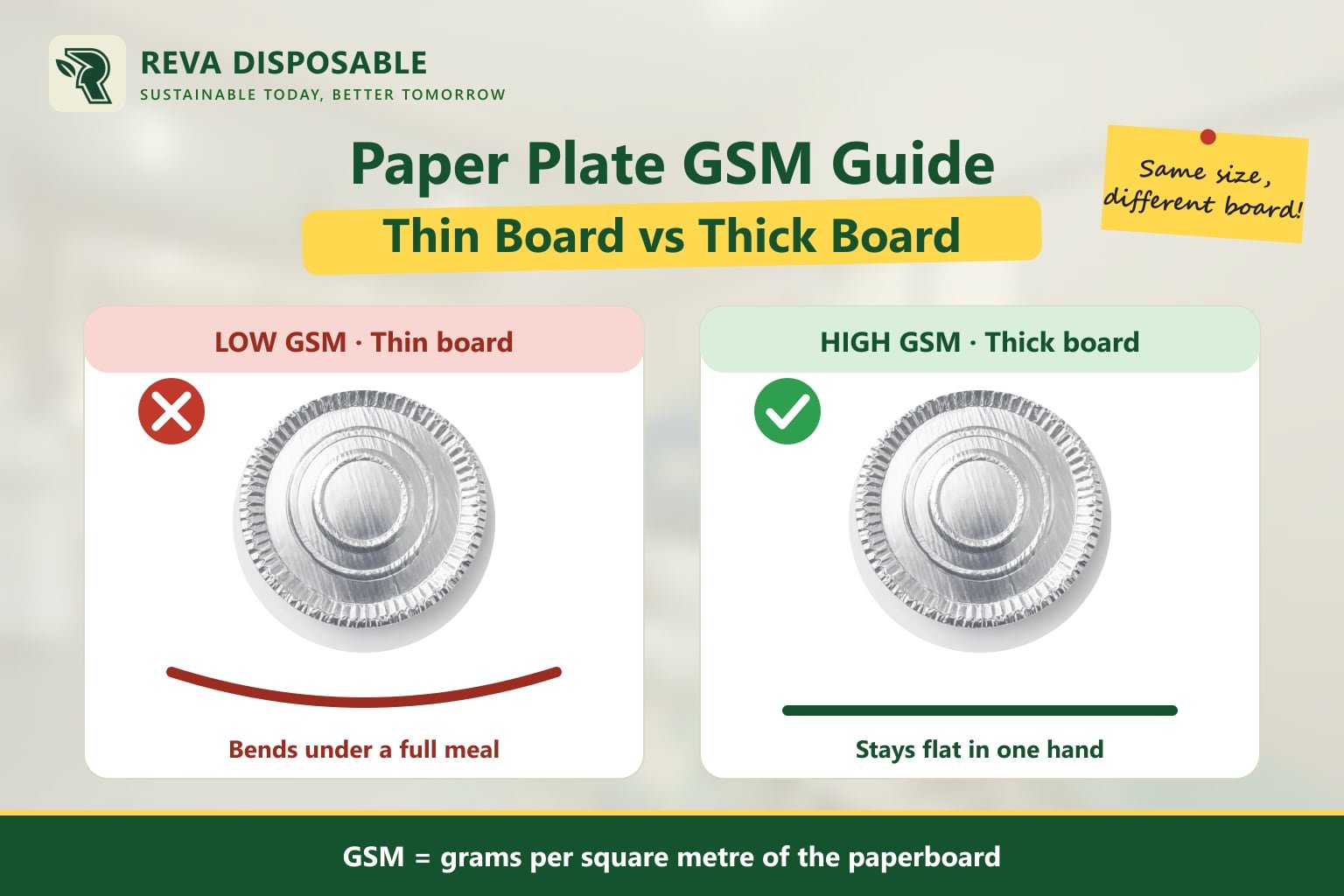
Short answer, if you are in a hurry: paper plate GSM is the weight of the paperboard in grams per square metre. A higher GSM means a thicker, stiffer plate. Small plates for sweets and dry snacks work on a lighter board, while 10 and 12 inch meal plates need a heavier board so they do not bend under dal, rice and sabzi. Always compare two quotes at the same size and the same GSM, and check a sample in your hand before a bulk order.
Every buyer asks for the rate. Very few ask for the GSM. Yet paper plate GSM is the main reason two plates of the same size can differ in price, and the main reason one of them folds in a guest’s hand. This guide explains it in plain words, from the factory floor in Dahod.
GSM stands for grams per square metre. Take one square metre of the paperboard a plate is made from and weigh it; that number is the GSM. The paper plate GSM meaning is simple: more grams in the same area means more fibre, so the board is thicker and stiffer.
GSM is a measure of the board, not of the finished plate. Lamination, foil and the pressed rim add strength on top of it. That is why paper plate GSM is the starting point for quality, not the whole story.
A plate has to do one job: carry food from the counter to the table without bending or leaking. Paper plate GSM decides how well it does that.
This is why a very low quote usually means a lower GSM, not a better deal. Our paper plate wholesale rate guide explains how GSM and other factors build the price.
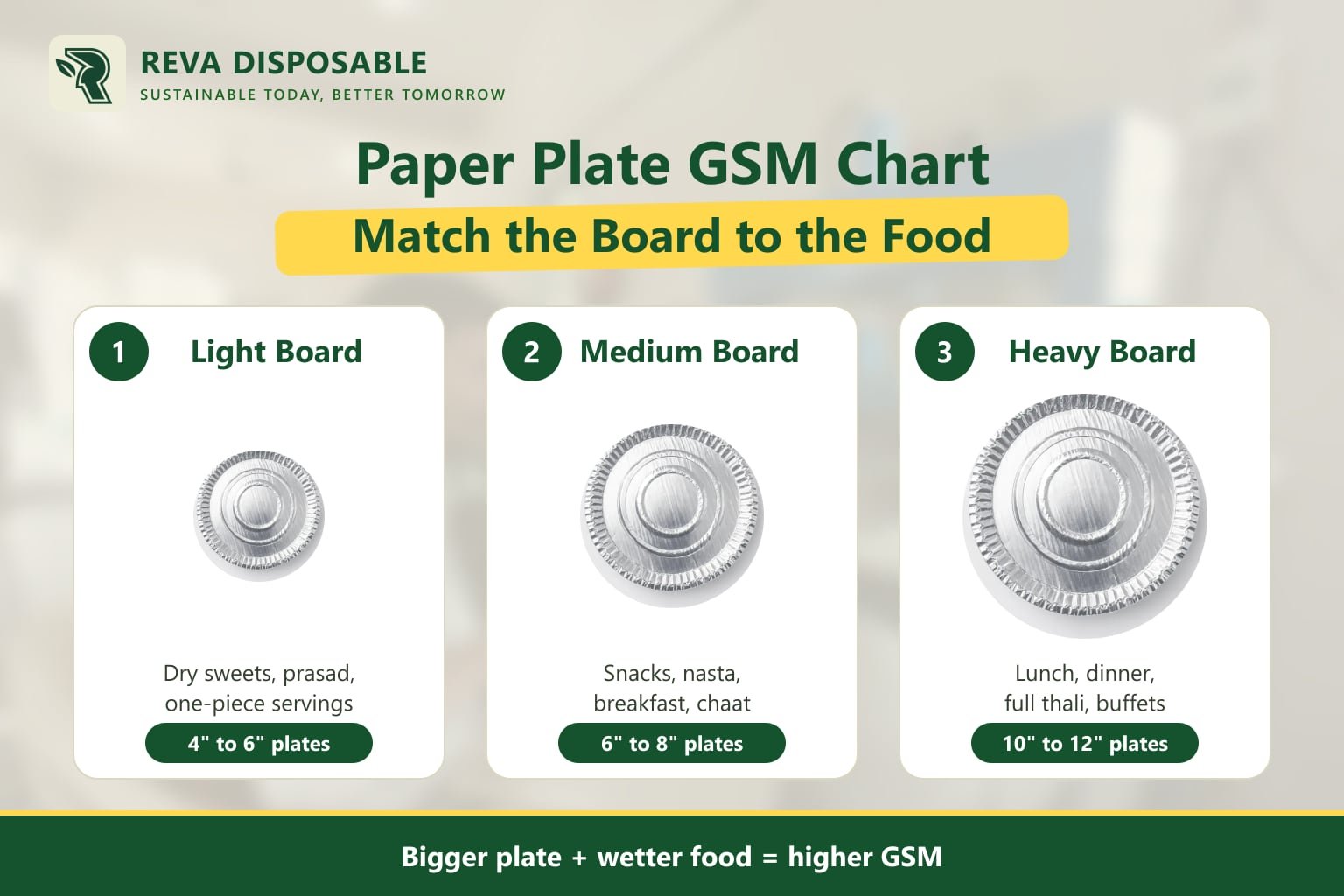
Board in the market is sold in a wide band, commonly from around 100 GSM at the light end to 300 GSM and above at the heavy end. Instead of memorising numbers, think in three grades. Use this paper plate GSM chart as a buying guide, and ask your supplier to write the exact GSM on the quotation.
| Board grade | Feels like | Best for | Typical plate sizes |
|---|---|---|---|
| Light board | Bends easily with two fingers | Dry sweets, prasad, one-piece servings | 4 to 6 inch |
| Medium board | Holds shape with light food | Snacks, nasta, breakfast, chaat | 6 to 8 inch |
| Heavy board | Stays flat in one hand when loaded | Lunch, dinner, full thali, buffets | 10 to 12 inch |
The rule behind the chart: as the plate gets bigger and the food gets wetter, the paper plate GSM should go up. For the right size for each dish, see our paper plate size guide.
Not exactly. GSM is weight; paper plate thickness is how thick the board measures. Two boards with the same GSM can have slightly different thickness depending on how tightly the fibres are packed. In daily buying, though, the two move together: a higher GSM board is thicker and stiffer.
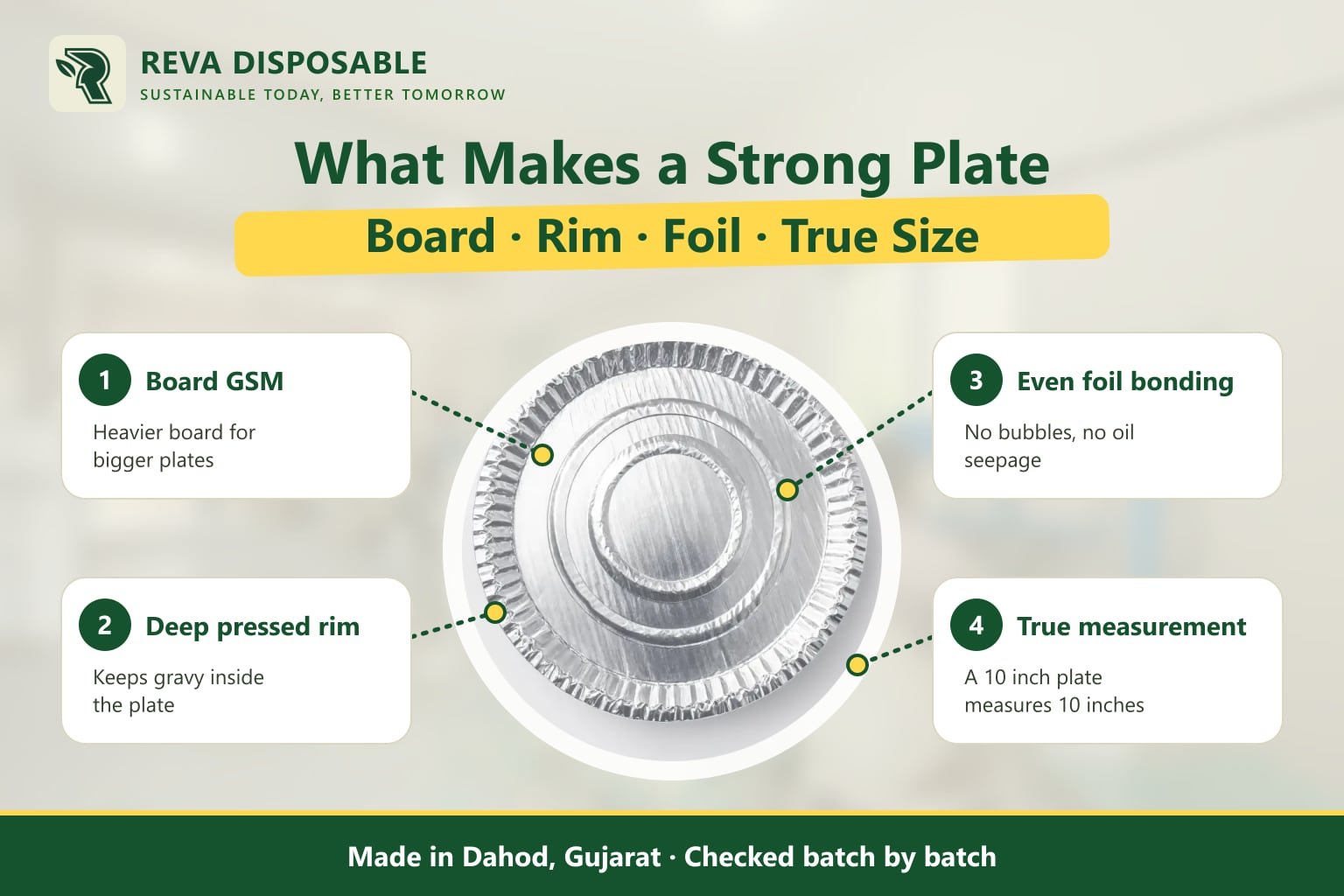
What you feel in your hand is paper plate thickness plus the shape. A deep, well-pressed rim makes a plate behave stiffer than its GSM alone suggests, which is why rim quality matters as much as board weight.
Plates are pressed from paperboard sheets or rolls, often with a foil or film layer on top. When a supplier quotes the paper plate raw material GSM, check what it includes:
Two quotes can both say the same number and mean different things. Ask which one is being quoted, and compare like with like.
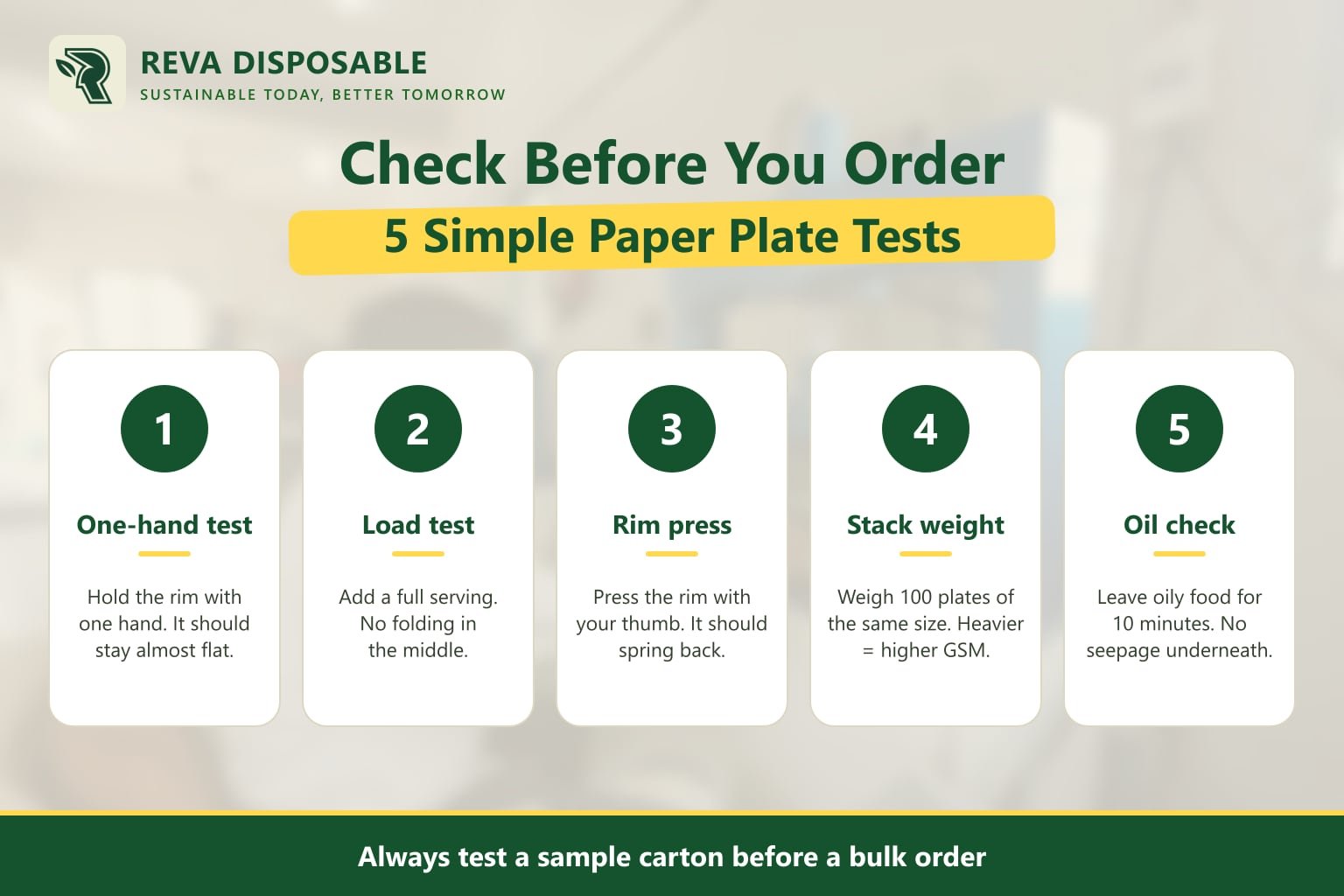
You do not need a machine to catch a weak plate. Try these checks on a sample carton.
If you are unsure, tell the manufacturer the menu and the plate size. A good supplier will suggest the grade instead of pushing the cheapest one.
When you buy direct, you can ask how the plate is made, not just what it costs. At Reva Disposable we hold the board grade per size instead of dropping it when paper prices rise, press every plate with a deep rim, and check size and rim strength batch by batch at our own unit in Dahod. We supply caterers, sweet shops, temples and wholesalers across Gujarat. You can see the full range on our products page.
GSM means grams per square metre. It is the weight of the paperboard used to make the plate. A higher paper plate GSM means a thicker and stiffer board.
There is no single best GSM. Small plates for dry sweets work on a light board, while 10 and 12 inch meal plates need a heavy board so they do not bend under a full serving.
Higher GSM gives a stiffer board, but quality also depends on the rim depth, the lamination or foil bonding and the true size. Check a sample, not only the number.
No. GSM is weight per square metre and thickness is the measured depth of the board. They usually rise together, so a higher GSM board is normally thicker.
Compare the weight of 100 plates of the same size from two suppliers, and do a one-hand test and a load test on a sample. The heavier, stiffer plate usually has the higher GSM.
Usually because the board GSM is different. Board is the largest part of the cost, so a lower GSM plate is cheaper but bends more easily.
Not sure which paper plate GSM your menu needs? Send your menu, plate sizes and town on WhatsApp at +91 96649 25059. We will suggest the grade, share a sample carton and give you factory rates from Dahod the same day.
Share two details and we will send size-wise rates on WhatsApp.
